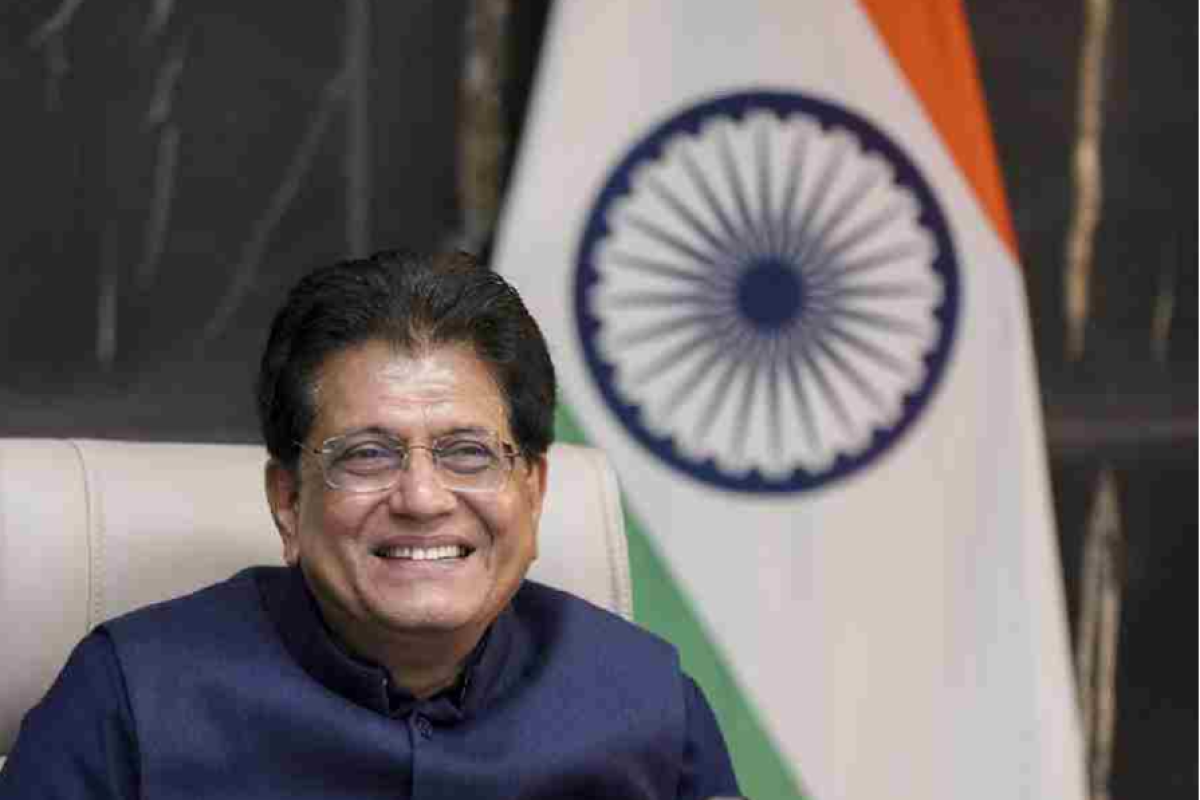
India has refused to open its dairy market under the newly concluded free trade agreement (FTA) with New Zealand, Commerce and Industry Minister Piyush Goyal said on Monday. The agreement, announced by Prime Minister Narendra Modi after a call with New Zealand Prime Minister Christopher Luxon, does not offer any concessions on dairy imports.
Although India agreed to hold consultations with New Zealand if it ever opens its dairy sector to another comparable economy in the future, Goyal emphasised that such a scenario would never arise. He reiterated that India has not liberalised dairy access in any of its FTAs so far.
The exclusion of dairy has caused political friction in New Zealand. Winston Peters, the country’s foreign affairs minister and leader of coalition partner New Zealand First, criticised the agreement as a “bad deal” and warned that his party would oppose its ratification in parliament. Peters argued that the pact gives away too much, particularly on immigration, while failing to secure access for New Zealand’s key dairy exports such as milk, cheese and butter.
The disagreement comes as India continues negotiations on a much larger and more consequential trade deal with the United States. Washington has been pushing for access to India’s sensitive farm and dairy sectors. While India–New Zealand bilateral trade stood at $1.3 billion in 2024–25, India–US merchandise trade during the same period was about $132 billion.
The India–New Zealand FTA, negotiated over nine months, aims to double bilateral trade by 2030. It provides zero-duty access for all Indian exports, reduces tariffs on 95 per cent of New Zealand exports to India, encourages $20 billion in investment over 15 years, and eases work visa norms.
Responding to questions on dairy, Goyal said New Zealand’s concern was limited to a clause allowing consultations if India ever extended dairy access to a similar economy. Since India does not intend to open the sector at all, he said the issue was irrelevant. He also clarified that the clause does not imply any binding commitment.
Goyal added that New Zealand firms could explore sending raw materials to India for processing and re-exporting finished products globally, which could attract investment and generate employment in India.
While Prime Minister Luxon welcomed the deal as a boost for trade and jobs, Peters highlighted that dairy products account for nearly 30 per cent of New Zealand’s total goods exports, worth about $24 billion in the year ending November 2025. He said the India FTA would be the first trade agreement signed by New Zealand that excludes its core dairy products.